


Jukebox and multi-zone audio
A jukebox is the only piece of equipment in the room that your customers pay to operate for you. Extend the audio to every zone and the same machine earns from areas that were silent.
The only equipment your customers pay to operate
Every other machine in the building needs someone to want to play it. A jukebox needs someone to want the room to sound different, which is a far more common impulse — and one that repeats all evening as the crowd changes.
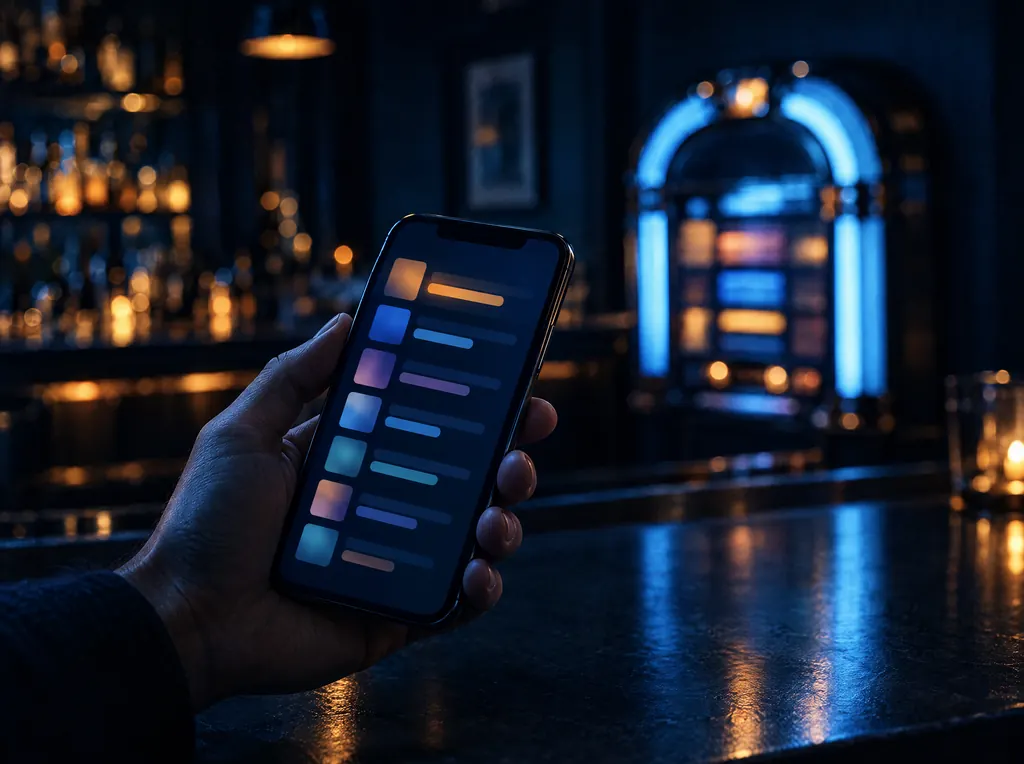
Modern digital jukeboxes take selections from the customer's phone, which removes the walk to the machine and the awkwardness of standing at it. Play volume rises accordingly, and so does the revenue share the venue earns from it.
- No capital outlay — equipment, catalog and updates are ours.
- Music licensing handled as part of the operation.
- App-based selection from anywhere in the venue.
- Remote diagnostics, so a silent system gets noticed.
The rooms you are not earning from are the quiet ones
Most venues run one audio zone. The front bar sounds alive, and the patio, the back room and the dining area sit in near silence — so customers drift back to the bar or leave. Zoning fixes it without adding a machine.
What a zone is
An independently controlled audio area with its own speakers, its own volume, and — where you want it — its own source. The patio can run quieter than the bar, or run something different entirely.
Why it earns
Customers pay to influence the space they are sitting in. If they are on the terrace and the jukebox only reaches the bar, they will not pay to change music they cannot hear. Extending the system converts an area that was generating nothing.
What it costs you
Nothing. Zone expansion is part of the placement — speakers, amplification, cabling and commissioning are ours, on the same published split.
A golf clubhouse, from experience
A clubhouse had a jukebox in the bar and a silent pool area. Members finished a round and sat outside, away from the only entertainment in the building.
We added the pool area as a second zone. Revenue on the same jukebox rose by more than 100%. No new machine, no capital, no change to the footprint — the demand already existed and had nowhere to go.
Club name omitted as a matter of standing policy.
What comes off the top before the split
Jukebox is the one category where a licensing fee is deducted from gross before the revenue share is calculated. Some operators do not mention this until the first statement. We would rather you saw it here.
The method. Use tax off gross, then music licensing at 28% of the original gross, then card and mobile processing, then an even split of what remains. The percentages are fixed. The tax rate that produces the post-tax figure is local, so the examples below are examples — not the calculation itself.
Worked example — Florida state rate, county with no discretionary surtax
| Step | Amount | Running total |
|---|---|---|
| Gross revenue | $100.00 | |
| Less inclusive use tax — divide by 1.04 | −$3.85 | $96.15 |
| Less Touch Tunes licensing at 28% of gross | −$28.00 | $68.15 |
| Less card and mobile processing | −$3.00 | $65.15 |
| Split 50/50 | Location $32.58 · General Vending $32.58 |
The same calculation — County carrying a 1.5% discretionary surtax
| Step | Amount | Running total |
|---|---|---|
| Gross revenue | $100.00 | |
| Less inclusive use tax — divide by 1.055 | −$5.21 | $94.79 |
| Less Touch Tunes licensing at 28% of gross | −$28.00 | $66.79 |
| Less card and mobile processing | −$3.00 | $63.79 |
| Split 50/50 | Location $31.89 · General Vending $31.89 |
Across Florida counties the location keeps approximately 32–33% of gross, depending on local tax. There is no single fixed percentage of gross, because the tax rate is not fixed.
On the 28%: The licensing agreement is written against gross and is indifferent to state and local tax, which varies everywhere. So the 28% is calculated on the original gross, not on the post-tax figure — and unlike the tax, it does not change by county.
Every revenue line is counted
Digital, online, credit card and app revenue are all accounted for and paid to the location. Many operators do not disclose these lines at all.
If your current statement shows a cash figure and nothing else, that is worth asking about — app and card play is a significant share of jukebox revenue on modern equipment.
Venue types
Bars and taverns
The core category. Bars, breweries & wineries →
Breweries and taprooms
Large open rooms and outdoor areas — almost always a zoning opportunity.
Restaurants
Background audio zoned separately from a bar area. Restaurants →
Entertainment venues
Bowling centers, clubhouses and FECs with multiple distinct areas. Entertainment →
The variables that actually move the number
We don't publish a calculator, because a number produced by five dropdowns would be a guess dressed up as a forecast. These are the factors that genuinely decide what a jukebox and multi-zone audio placement earns.
- Occupied hours Hours the room is busy enough that someone wants to influence the music. Empty hours earn nothing regardless of equipment.
- Zone count Patios, back bars and dining rooms each need their own zone. Adding a zone frequently adds revenue without adding a machine.
- Crowd age and mix Song selection behavior varies sharply by demographic, and it drives both play volume and mobile app use.
- Volume policy A venue that keeps the system too quiet to hear suppresses its own revenue. This is the most common self-inflicted cap.
- Competing entertainment Live music nights and televised sport displace jukebox play. Programming around them protects both.
Give us a conversation and we'll model it properly
Tell us your traffic, your layout and your hours, and we'll build a realistic projection against comparable placements — not a slider. If the numbers don't work for your property, we'll tell you that too.
Reliability is the product
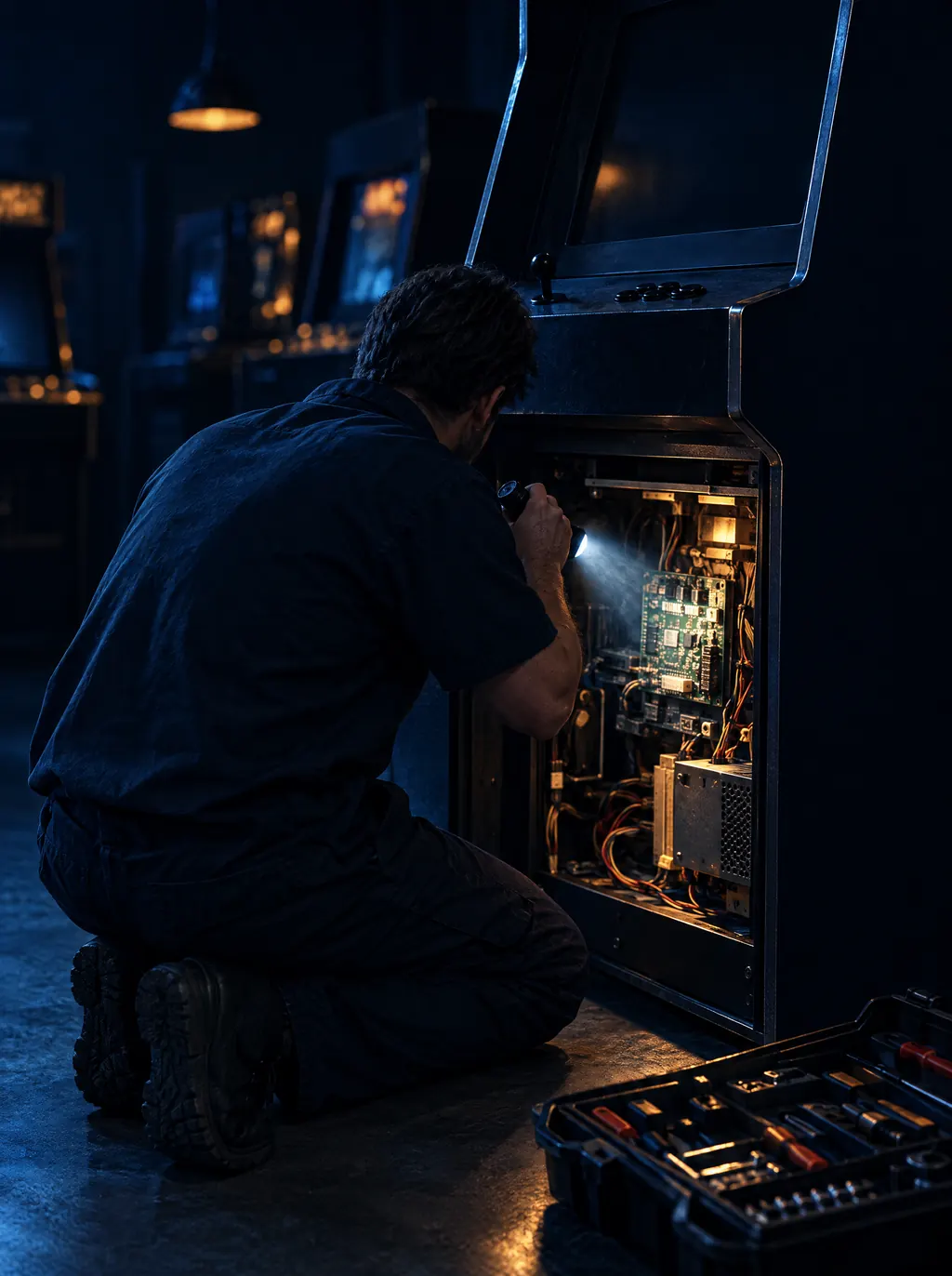
Equipment earns nothing while it is out of service. Everything else — the split, the titles, the payment technology — only matters if the machines are working when your guests walk past them.
- Service requests are received 24/7. A QR code on every machine opens a form that takes about two taps.
- Response is prioritized by urgency. A jukebox down in a full bar on a Friday night gets someone moving within minutes. A jammed bill acceptor at 4am gets logged and handled first thing — we don't pretend otherwise.
- Your problem is logged the moment it happens and triaged the moment it matters. That is a more honest promise than "next business day", and in practice a faster one.
- Remote monitoring on supported equipment means we often know before you do.
Partner, not vendor
Tell us about your location. If we can make it work we'll show you the numbers, and if we can't we'll say so. Either way you get a straight answer.