


Transportation and transit
Airports, bus terminals, rail stations, cruise terminals and park-and-ride sites. Captive audiences with time to fill and no way to leave.
Nobody in a terminal has anywhere else to be
Airports, bus and rail terminals, cruise ports and park-and-ride sites share one economic feature: a large number of people with a known amount of time to fill and no ability to leave. Retail understands this. Most terminals still treat the gap between arriving and boarding as dead space.
Family seating areas, baggage-claim halls and departure lounges support amusement placements that earn steadily without competing with concession tenants for food and retail spend.
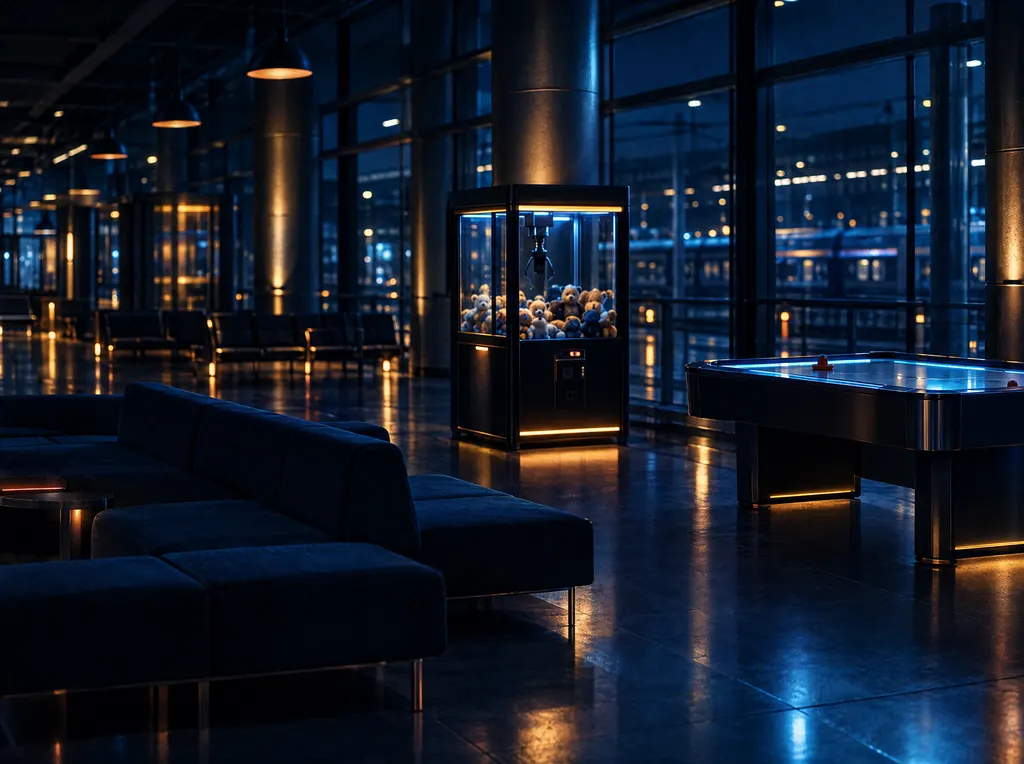
Built for unattended operation
In a bar, a member of staff notices a dead machine within the hour. In a terminal nobody reports anything — passengers walk past and board. That single fact drives the entire service model here.
Remote monitoring as standard
Supported equipment reports its own faults and its own cash and card status. In an unattended environment this is not a premium feature, it is the only way the placement stays productive.
Cashless by default
Travelers carry cards and phones, frequently in the wrong currency for coins. Card and contactless are the primary payment path, with cash secondary where it makes sense at all.
Concession and compliance fit
Placements have to satisfy concession agreements, fire egress rules, sightline requirements and security screening constraints. We work inside those before proposing a location, not after.
Hardened for public space
Equipment specified for continuous unsupervised operation, cleaned on a schedule, and built to survive an environment with no staff standing over it.
Scheduled service windows
Collections and maintenance timed to airside access rules and quiet periods rather than to our convenience.
Reporting per placement
Revenue by machine and by period, which matters when a concourse agreement is up for renewal and you need to show performance.
Structured to fit a concession
Transit placements normally sit inside an existing concession or property agreement, so the commercial structure follows whatever framework the authority or operator already uses — a share of gross, a minimum guarantee, or a combination.
Our per-category revenue share structures are the starting point and are published in full. Where a terminal requires a minimum annual guarantee we will say plainly whether the footfall supports one.
Where these placements work
- Airport family and children's waiting areas
- Departure lounges with long scheduled dwell
- Baggage claim and arrivals halls
- Bus and coach terminal concourses
- Rail station waiting rooms
- Cruise terminal embarkation halls
- Park-and-ride and transit center lounges
The variables that actually move the number
We don't publish a calculator, because a number produced by five dropdowns would be a guess dressed up as a forecast. These are the factors that genuinely decide what a transportation and transit placement earns.
- Dwell time before departure The gap between arriving and boarding is the entire opportunity. Longer scheduled waits earn more.
- Passenger throughput Daily boardings past the specific placement, not terminal-wide totals.
- Family and leisure share Leisure routes carry children and unstructured time. Commuter routes carry neither.
- Placement clearance Concession agreements, fire egress and sightline rules constrain where equipment can go, which shapes what it earns.
- Unattended reliability Nobody in a terminal reports a fault. Remote monitoring is not optional here, it is the whole service model.
Give us a conversation and we'll model it properly
Tell us your traffic, your layout and your hours, and we'll build a realistic projection against comparable placements — not a slider. If the numbers don't work for your property, we'll tell you that too.
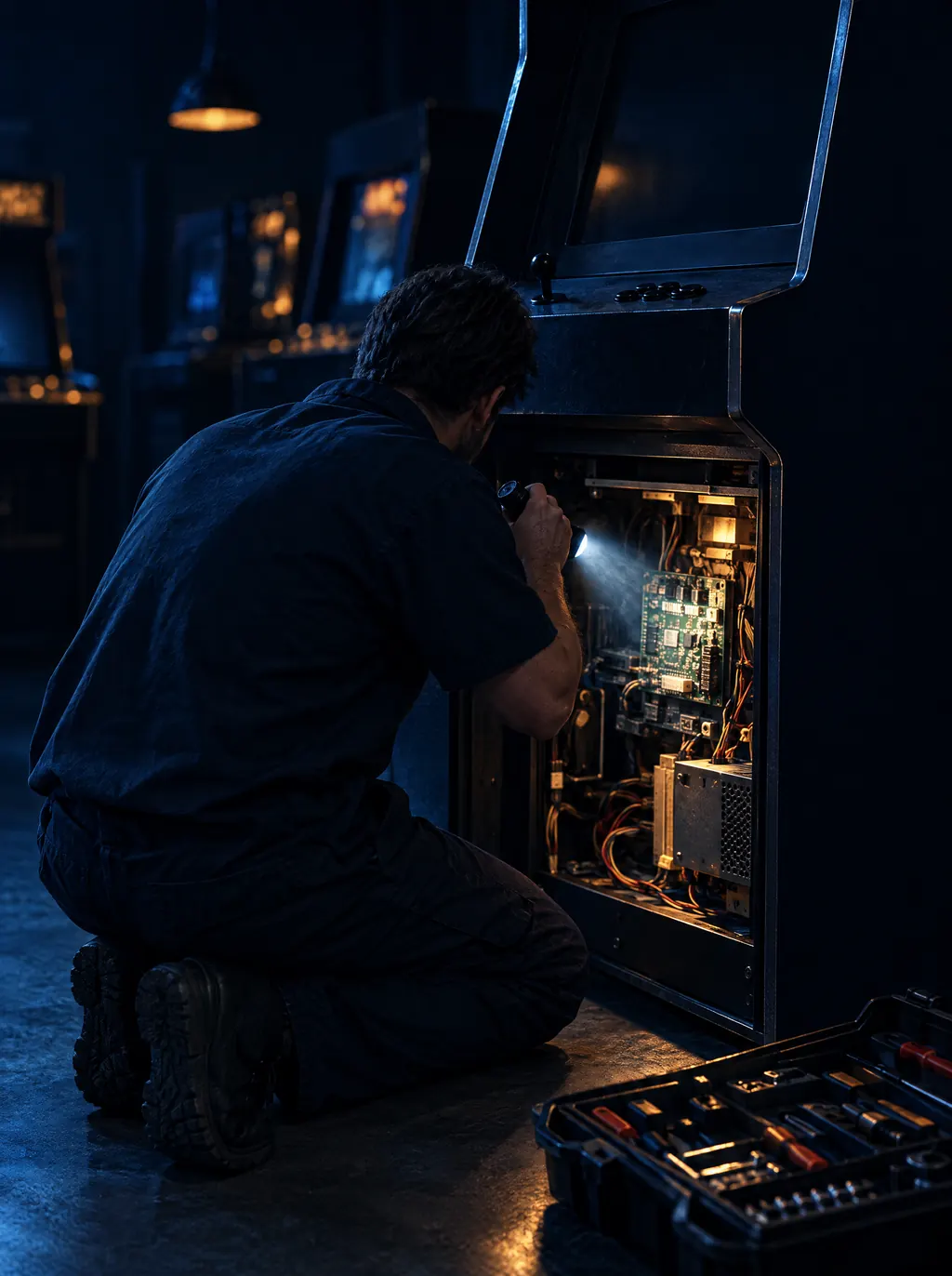
Reliability is the product
Equipment earns nothing while it is out of service. Everything else — the split, the titles, the payment technology — only matters if the machines are working when your guests walk past them.
- Service requests are received 24/7. A QR code on every machine opens a form that takes about two taps.
- Response is prioritized by urgency. A jukebox down in a full bar on a Friday night gets someone moving within minutes. A jammed bill acceptor at 4am gets logged and handled first thing — we don't pretend otherwise.
- Your problem is logged the moment it happens and triaged the moment it matters. That is a more honest promise than "next business day", and in practice a faster one.
- Remote monitoring on supported equipment means we often know before you do.
Partner, not vendor
Tell us about your location. If we can make it work we'll show you the numbers, and if we can't we'll say so. Either way you get a straight answer.