


Coin and digital laundry
Coin mechanisms jam, coins get stolen, and nobody carries quarters any more. Card and app payment fixes the revenue leak and the service calls at the same time.
Nobody carries quarters any more
Coin laundry loses revenue in three directions at once. Guests and residents who have no change simply do not wash. Coin mechanisms jam and generate service calls. And a box of coins in a public room is an invitation that gets accepted more often than most operators admit.
Card and app payment closes all three. On the same machines, in the same room, revenue typically rises — because the payment friction that was suppressing use is gone, not because anyone raised the price.
- No capital outlay. Equipment and payment systems are ours.
- No coin handling. No float, no collection, no theft target.
- Remote diagnostics — faults reported before a resident complains.
- A published revenue share for the laundry category.
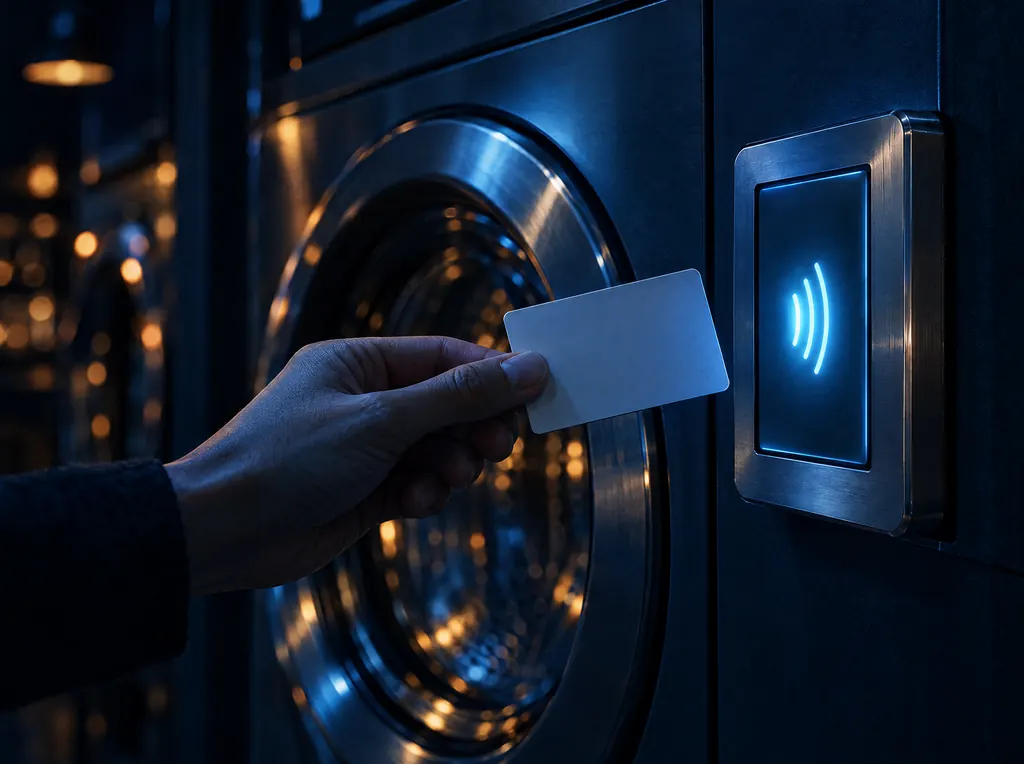
Card, app or coin — usually more than one
Most rooms end up running two payment paths, because a hotel guest and a long-term resident behave differently.
Reloadable cards
Issued at the front desk or a value station. The default for hotels and for residents who would rather not install anything.
Mobile app
Start a machine, top up, and get a notification when the cycle finishes. It also tells a resident whether a machine is free before they carry a basket down four floors.
Contactless and credit
Tap to pay on supported hardware, which is what transient guests reach for first.
Coin, where it still earns
We do not rip out coin for the sake of it. Some sites genuinely still need it, and it can run alongside card.
Machine availability display
Live status in the app and on a screen in the room. Cuts wasted trips and the complaints that follow them.
Refunds without a service call
Failed cycles refunded remotely rather than by leaving an envelope at a front desk.
Sizing the room is the whole design question
Too few machines and you cap revenue through queueing — residents give up and use a laundrette. Too many and capital sits idle. The right ratio depends on unit count, how many units have their own machines, and how seasonal the property is.
We will survey the room, count the real demand, and tell you if the honest answer is fewer machines than you currently have.
Property types
Hotels and resorts
Guest laundry for extended-stay, resort and suite properties. Hotels →
Multifamily and student housing
Shared laundry as a core amenity. Landlords →
Workforce accommodation
Round-the-clock use on shift patterns, where uptime is everything.
Truck stops and travel centers
Driver laundry alongside showers. Truck stops →
RV parks and campgrounds
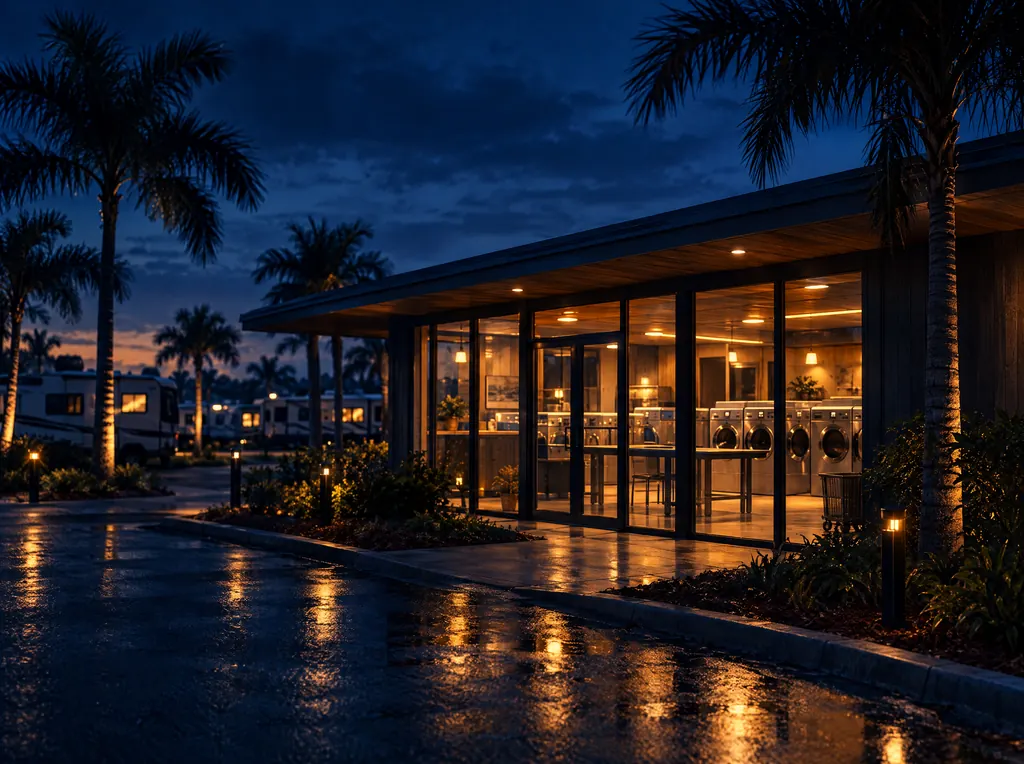
RV parks run on a different rhythm from anything else in this category. Occupancy swings hard by season, guests stay for weeks rather than nights, and the laundry room is one of the few shared spaces everyone uses.
The mistake most parks make is sizing the room for the peak. Machines bought for a full February sit idle from June, and the capital never earns back. On revenue share that problem is ours rather than yours — we size for real demand, and if the honest answer is a smaller room, that costs you nothing to hear.
- Card and app payment, so seasonal guests never need change
- Machine availability in the app — useful when the room is a walk away
- Equipment sized to sustained occupancy, not the February peak
- Amusement and games for the clubhouse where the park has one — see entertainment venues
The variables that actually move the number
We don't publish a calculator, because a number produced by five dropdowns would be a guess dressed up as a forecast. These are the factors that genuinely decide what a coin and digital laundry placement earns.
- Machine-to-user ratio Too few machines caps revenue through queueing. Too many idle. The ratio is the whole design question.
- Payment method Moving from coin to card or app typically lifts revenue on the same machines, because the payment friction was suppressing use.
- Turn frequency Cycles per machine per day. Hotels, student housing and RV parks each have a distinct rhythm.
- Seasonality RV parks and snowbird properties swing hard by season. Sizing to the peak strands capital for half the year.
- Utility and vend pricing Vend price against local water and power cost decides margin, and it should be reviewed, not set once.
Give us a conversation and we'll model it properly
Tell us your traffic, your layout and your hours, and we'll build a realistic projection against comparable placements — not a slider. If the numbers don't work for your property, we'll tell you that too.
Reliability is the product
Equipment earns nothing while it is out of service. Everything else — the split, the titles, the payment technology — only matters if the machines are working when your guests walk past them.
- Service requests are received 24/7. A QR code on every machine opens a form that takes about two taps.
- Response is prioritized by urgency. A jukebox down in a full bar on a Friday night gets someone moving within minutes. A jammed bill acceptor at 4am gets logged and handled first thing — we don't pretend otherwise.
- Your problem is logged the moment it happens and triaged the moment it matters. That is a more honest promise than "next business day", and in practice a faster one.
- Remote monitoring on supported equipment means we often know before you do.

Partner, not vendor
Tell us about your location. If we can make it work we'll show you the numbers, and if we can't we'll say so. Either way you get a straight answer.